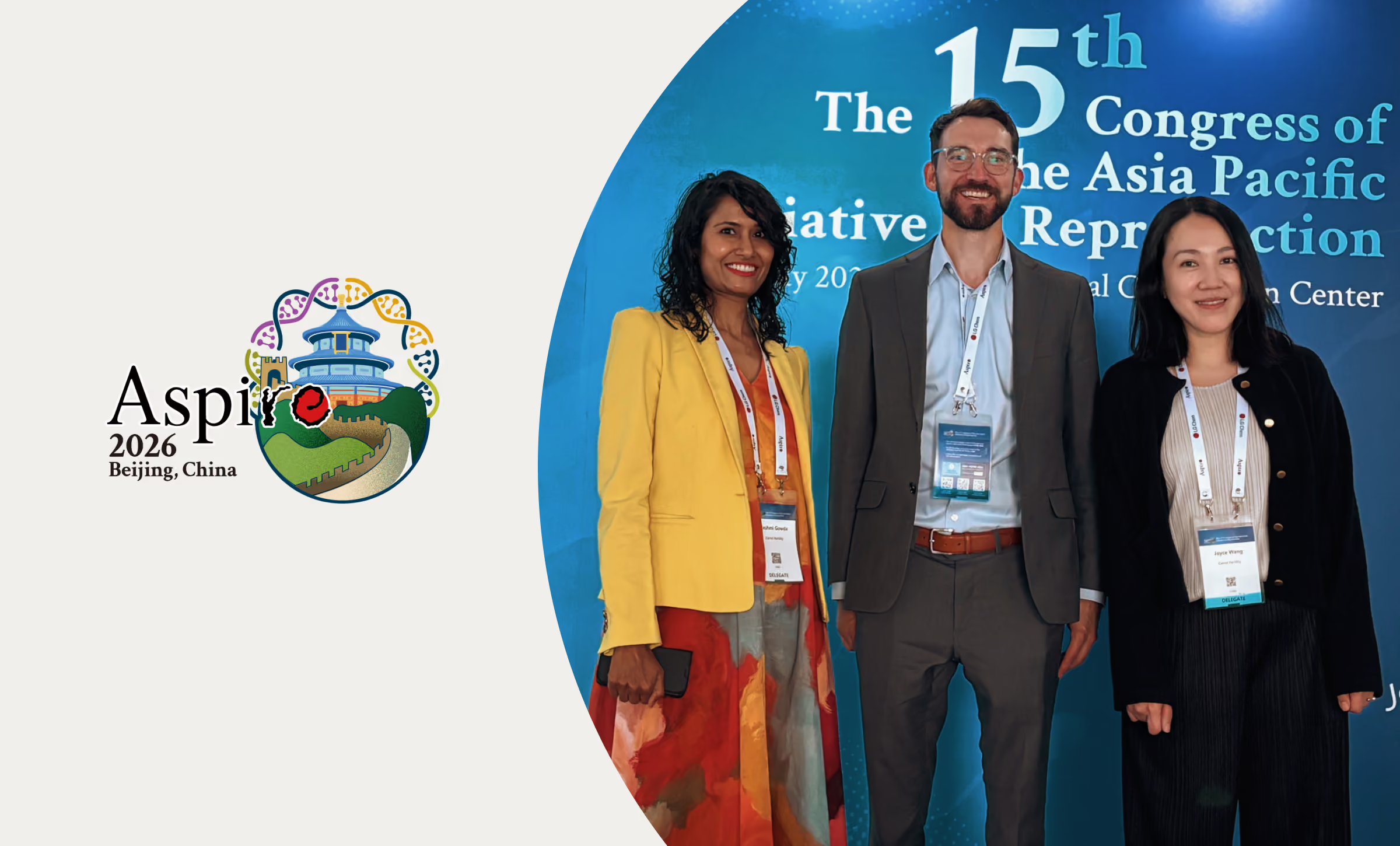
From May 7 to 10, 2026, more than 3,000 clinicians, embryologists, scientists, nurses, and counselors gathered in Beijing for ASPIRE 2026, the annual congress of the Asia Pacific Initiative on Reproduction and the region's premier scientific forum for reproductive medicine. This year's gathering was marked by urgency on multiple fronts, including declining fertility rates across the Asia Pacific, growing patient complexity, and persistent inequity in who can access quality care.
I attended as part of Carrot's team, and also met with partner clinics from Singapore, India, and Taiwan. Here’s what stood out.
The current state of Asia Pacific fertility care
Fewer than half of APAC countries are above population replacement level. Fertility rates are declining, patients are older and presenting with more complex histories, and access to care remains deeply unequal across the region.
Regulatory frameworks vary widely by country. Policies on donor anonymity, gestational surrogacy, assisted reproductive technology (ART) financing, and eligibility differ widely, creating cross-border patient flows and access disparities that are reshaping how care is delivered.
The region is building its own evidence base. China's national birth cohort study, which is tracking 110,000 families, has already produced significant new safety data on children born with ART. This is one example of how the Asia Pacific is moving beyond reliance on European and North American guidelines.
Mental health is no longer on the margins of fertility care
The most significant cultural shift at ASPIRE 2026 was the prominence of mental health across the program, a notable evolution in a region where psychological distress during fertility treatment has historically been underacknowledged.
The data was striking. A Korean prospective study found that 88.9% of male patients diagnosed with azoospermia report moderate to severe depressive symptoms. A Japanese survey found that 64.7% of couples with non-obstructive azoospermia abandon treatment entirely after an unsuccessful sperm retrieval. A retrospective cohort study presented at the conference found that structured couples counseling made patients nearly three times more likely to proceed with donor treatment, and helped them move forward through what researchers described as a smooth transition to alternative paths.
Professor Anuja Dokras of the University of Pennsylvania noted that up to 60% of people affected by infertility experience mental health challenges, including anger, shame, guilt, and isolation, but only about 20% seek professional psychological support. That has real clinical consequences. People who internalize blame are more likely to avoid healthcare and less likely to sustain the lifestyle changes that can improve their odds of getting pregnant. Speakers made it clear that mental health support should be built into fertility care from the start.
For Carrot, emotional and psychological support has always been part of how we support members throughout their journeys, because what happens emotionally is inseparable from what happens clinically.
Pelvic pain: A $6 billion market that’s still underserved
A session on chronic pelvic pain introduced the RU-SUM framework, developed by the International Pelvic Pain Society in 2025, as a new structure for a condition that affects roughly 20% of women and 5% of men. The global market for pelvic pain care is valued at $6 billion and growing at approximately 8.3% annually. The clinical gold standard of pelvic floor physical therapy and multidisciplinary care is well established. Access to it is not.
This conversation reinforced something we’ve seen at Carrot: 85% of our members report symptoms related to pelvic floor health. That’s why we partnered with Origin, to bring integrated pelvic floor therapy to Carrot members. The partnership gives members access to virtual and in-person care alongside Origin's proprietary digital programs, reducing costs by over $3,000 per person annually.
The evidence base and how you read it matters
A keynote on meta-analysis methodology made the case that aggregating heterogeneous studies can produce misleading consensus when methodological rigor is not applied. A live case study on uFSH data illustrated this directly. Raw comparisons favored one treatment, but adjusting for eight confounders reversed the conclusion entirely.
For anyone building evidence-based programs, the message was straightforward: pointing to a body of research is not enough. How that research is evaluated matters just as much as what it shows.
Carrot's Benefits Design Guidance (BDG) team does this work systematically. We evaluate study quality and methodological rigor before those findings inform how Carrot designs and recommends fertility benefits. It’s what determines whether a benefit truly improves health outcomes.
More intervention is not always better
Across sessions on uterine surgery, stimulation protocols, and endometrial management, speakers consistently pushed back on the pressure to do more. Hysteroscopy, platelet-rich plasma (PRP), and novel luteal support strategies were all examined critically, with calls for selectivity grounded in individualized clinical judgment rather than routine adoption.
That tension is familiar. Carrot's research for our Beyond IVF report, published in March 2026, found that most people navigating fertility journeys want less invasive and lower-cost options before pursuing IVF. But fewer than half had ever discussed options such as metabolic health support and men’s health pathways with a provider.
It also reflects how Carrot works with regional clinical partners. The practitioners who know their patient populations and local care context are best positioned to make these calls, and our role is to support that judgment.
Building relationships across the Asia Pacific
Beyond the sessions, we connected with leading partner clinics and key opinion leaders in Singapore, India, and Taiwan to gain a clearer picture of what fertility care in the Asia Pacific looks like from people who are truly familiar with it.
We heard that there’s real demand for partners who can bring patient navigation, education, and benefits infrastructure to markets where those resources have historically been limited.
"By building relationships with the clinicians and clinic leaders who are shaping fertility care across the Asia Pacific, Carrot is positioning itself as a trusted partner in the region's most urgent conversation: How to make high-quality, personalised reproductive care accessible to more people." - Alex Zarka, Carrot’s VP of Global Clinical Operations
Looking ahead
For Carrot, Beijing was an excellent continuation of our efforts. The partnerships, conversations, and insights from ASPIRE 2026 will shape how we continue to build our presence across the Asia Pacific, a region where scientific innovation is accelerating even as structural barriers to access remain.