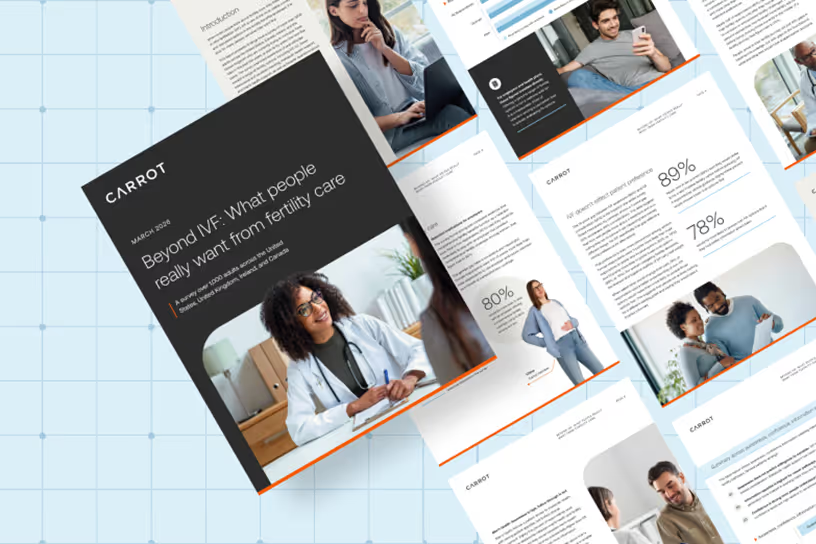
Most people navigating fertility journeys want comprehensive and lower-cost options before in vitro fertilization (IVF), including metabolic health, men's health, and less invasive treatment pathways. But the conversations that would connect them to those options aren't happening. A new report from Carrot, a global fertility, family-building, and hormonal health care platform, reveals the gap between what people want and what they're being offered.
The report, "Beyond IVF: What People Really Want from Fertility Care," draws on a survey of 1,010 adults across the United States, United Kingdom, Ireland, and Canada who are currently trying to conceive, have tried in the past five years, or plan to try within the next five years. The findings reveal a consistent pattern: people want more options, earlier guidance, and care that does not default immediately to the most invasive or costly treatments.
"People are telling us exactly what they want — earlier guidance, more options, and care that doesn't default to the most invasive treatment first," said Tammy Sun, Founder and Chief Executive Officer of Carrot. "The gap between that demand and what the system currently delivers is not subtle, and it is not inevitable. Clinicians want to offer comprehensive care. They need benefit structures and care pathways that make room for it."
The report identifies four core gaps shaping the current fertility care experience: high awareness of IVF paired with resistance to pursuing it, strong interest in metabolic and men's health support without corresponding clinical engagement, delayed fertility education, and growing demand for comprehensive fertility benefits.
IVF awareness is high, but so is resistance
While awareness of IVF is nearly universal among those surveyed (89%), willingness to pursue it is significantly lower (58%), representing the largest gap between awareness and consideration of any fertility option included in the study.
Cost and invasiveness are the primary drivers of IVF resistance: 83% of respondents said they would choose lower-cost options first, and 89% of women said they would prefer to try a less invasive option before IVF if supported by clinical guidance. When asked what would shift their path, 78% of respondents said a better understanding of non-IVF options would make them more likely to pursue those alternatives first.