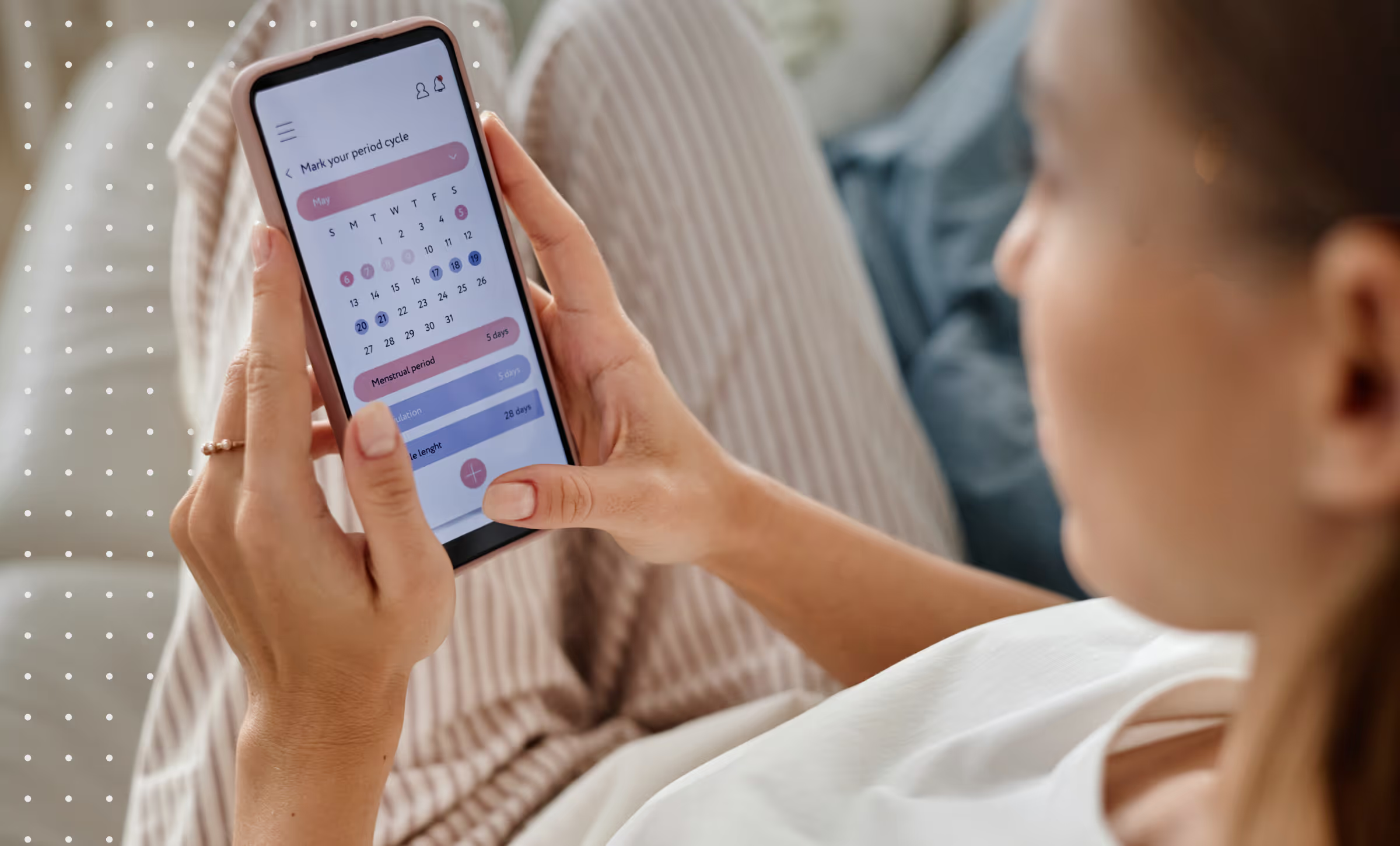
Knowing how to track your menstrual cycle is one of the simplest ways to understand your body and reproductive health better. Your menstrual cycle is the monthly hormonal pattern your body goes through to prepare for a possible pregnancy. It starts on the first day of your period and ends the day before your next period begins.
There’s no single “best” way to track your cycle or ovulation. Some people like simple paper calendars; others prefer apps, ovulation tests, or smart devices. You can mix and match to find an approach that works for your body, your lifestyle, and your goals.
Benefits of tracking your cycle
Have you ever noticed that some weeks you feel full of energy, get great sleep, and stay in a good mood, while other weeks are the exact opposite? These changes aren’t random — they’re cyclical! More specifically, they’re part of your menstrual cycle.
Knowing how to track your cycle, and especially how to track your period and ovulation, has many useful benefits.
Understand your unique cycle
Like with many things health-related, menstrual cycles vary from person to person. Typically, a regular menstrual cycle happens every 24–38 days. If your periods come more often than every 24 days, less often than every 38 days, or vary widely from month to month, that may be considered irregular.
When you track your period and note the first day of bleeding each month, you’ll start to see your personal pattern. Uncovering your personal pattern means uncovering what’s normal for you.
Spot possible health issues earlier
Cycle tracking doesn’t diagnose conditions, but it can highlight changes worth discussing with a healthcare provider. These patterns in your cycle can sometimes be linked to issues like fibroids, polyps, hormonal changes, or conditions such as polycystic ovary syndrome (PCOS) or thyroid disorders.
Maintaining a tracking log and bringing it to appointments can help your clinician decide if additional tests are needed.
See patterns in symptoms and mood
In the case of tracking your cycle, keeping detailed notes is encouraged. Adding notes about symptoms alongside your regular monitoring helps you connect symptoms with specific days or phases of your cycle.
Understand your fertile window
Learning how to track your period and ovulation lets you know when you’re most likely to get pregnant, or when to be extra careful with your birth control plan.
Your “fertile window” is usually the few days before ovulation and the day of ovulation itself. Different tracking methods can help you estimate when that window is likely to happen in your cycle.
Phases of the menstrual cycle
When many people talk about the menstrual cycle, they are often referring to a person’s period. However, menstrual cycles are much more complicated.
Every cycle has four main phases:
- Menstrual phase
- Follicular phase (days 1–13)
- Ovulation (days 14–21)
- Luteal phase (days 21–35)
During these phases, your body will experience different reactions and symptoms. Understanding how these phases work means you can improve how you take care of your body. Remember, the exact timing is different for everyone, and your phases can vary in length from person to person and cycle to cycle. What matters most is learning what’s typical for you over time.
Menstrual phase
This is the phase most people think of as a “period,” or menstruation. During this phase, the uterine lining breaks down and leaves the body through the vagina.
What’s happening in your body
This phase starts on Day 1, the first day you experience true menstrual bleeding (not just spotting). If pregnancy did not occur in the last cycle, levels of estrogen and progesterone drop. That hormone shift tells the uterus it’s time to shed the lining it built up.
The uterine lining (endometrium), blood, and mucus leave your body through the vagina over a few days. Typical bleeding lasts about three to seven days, though some people have shorter or longer periods.
How you’ll likely feel:
- Bleeding (light to heavy)
- Cramps or lower back pain
- Bloating
- Headaches
- Fatigue
- Mood changes
During this phase, most people benefit from gentle movement, heat pads, rest, and staying hydrated.
Follicular phase
What’s happening in your body
The follicular phase starts on the same day your period starts and continues after bleeding stops. During this time, follicle-stimulating hormone (FSH) tells the ovaries to start maturing follicles, which contain immature eggs.
Over several days, one follicle usually becomes “dominant.” That follicle produces increasing amounts of estrogen, and around days 10–14, a full mature egg (ovum) will form.
How you’ll likely feel:
- Period flow slows down and stops
- Bloating often improves
- Energy levels may rise
- Improved sleep and mood
- Better focus
Chances of being fertile during this phase are low. Many people have more energy during this phase.
Ovulation
Ovulation is when the ovary releases a developed egg, and it is considered your most fertile window.
What’s happening in your body
An increase in the luteinizing hormone (LH) causes an ovary to release its egg. When the ovary releases an egg, it increases estrogen levels. Hormone levels going up and down can cause pain or discomfort.
How you’ll likely feel:
- Mild cramping or pelvic discomfort
- Increase in energy levels
- Experience an increased sex drive
When people talk about how to track your period for fertility, they’re often trying to pinpoint when the ovulation phase occurs.
Luteal phase
The luteal phase begins after ovulation and lasts until your next period starts, which is about two weeks.
What’s happening in your body
The empty follicle that released the egg becomes the corpus luteum, which produces the progesterone hormone. If you have gotten pregnant, the progesterone levels will stay elevated to support the development of the embryo. If you have not become pregnant, the progesterone levels drop, transitioning you into the next menstrual cycle. This is when people may notice premenstrual symptoms (PMS).
For about two weeks after you ovulate, your progesterone levels go up. If you don’t get pregnant, your hormone levels drop back down. When this happens, you may notice some premenstrual syndrome (PMS) symptoms.
How you’ll likely feel:
- Bloating, water retention
- Experience headaches
- Changes in appetite or cravings
- Trouble falling or staying asleep
- Digestive changes
Tracking your symptoms can help you manage and work around them.
Days are approximate and based on the median menstrual cycle length of 28 days.
Common cycle tracking methods
There are multiple options for tracking your period and ovulation. Some of the most common methods for tracking your cycle include:
- Cycle tracking apps with built-in reminders and symptom tracking
- Calendar method (also called the rhythm method)
- Cervical mucus observation
- Ovulation predictor kits (OPKs)
- Smart apps and wearable trackers
While some people might prefer one method over another, it’s also possible (and common) to combine methods.
Using period and fertility tracking apps
Period tracking apps were first released around 2013. Today, more than 50 million people worldwide use them to log their cycles and get predictions for future periods and fertile windows. Period tracking apps are especially popular among millennials and Generation Z individuals.
Most apps help users keep track of start and end dates of their period, log symptoms, get predictions about their current cycle stage, and receive ovulation forecasts.
Reasons to use period and fertility tracking apps:
- They’re easy for almost anyone to use
- Get cycle reminders
- Data accessible across multi-device access
- Personalized predictions.
Popular cycle tracking apps:
Calendar/rhythm method
The calendar rhythm method is popular because there’s a low barrier to entry. Anyone can track their cycle using a simple paper calendar, notebook, or digital calendar.
With this tracking approach, you may prefer to use the traditional method, which requires you to track your cycle for six to twelve months, or the standard days method. The standard days method is best for those whose cycles are between 26 and 32 days long.
Here’s how calendar cycle tracking works on the standard days method:
- Count the days in your menstrual cycle, starting with the first day of your period, until your next cycle starts.
- Days 1–7 would not be considered fertile days.
- Days 8–19 are considered your fertile window.
- Days 20 through the end of your cycle are also not typically fertile days.
- When your period begins again, start your count over from the beginning.
Reasons to use the calendar rhythm method
This method is low-tech, free, and relatively easy to do on your own. Plus, it helps you understand the big-picture pattern of your own menstrual cycle.
Limitations of the rhythm method
It works best if your cycles are regular and consistent. This method doesn’t account for factors that can change ovulation, like stress or illness.
Cervical mucus monitoring
Cervical mucus is fluid from your cervix, which changes throughout your menstrual cycle. Tracking this is helpful because the change in discharge can indicate if you are within your fertile window.
For instance, when cervical mucus is clear and slippery, it’s easier for sperm to reach an egg during ovulation. Someone who monitors the qualities of their cervical mucus can keep tabs on where they are within the menstrual cycle.
- When you are not in your fertile window, mucus will typically be either white or yellow, sticky, or creamy.
- When you are in your fertile window, mucus will be clear, wet, slippery, and stretchy — comparable to raw egg whites.
The simplest way to check mucus is by placing a clean finger into your vagina and checking the qualities of the mucus. You can also monitor the discharge in your underwear for clues.
Reasons to monitor cervical mucus
It’s free, natural, and helps you learn your body’s signals in real time.
Limitations of cervical mucus monitoring
It can be affected by infections, medications, and sexual activity. It also requires consistency in tracking so you can learn what’s normal for your body.
Ovulation predictor kits
Ovulation predictor kits (OPKs) work by recognizing a rise in the luteinizing hormone, which signals ovulation. At this point in the menstrual cycle, a person is at their most fertile, and therefore most likely to get pregnant.
OPKs are similar to pregnancy tests in that a person pees on a test strip or into a cup and dips a test strip to check for a spike in LH. A positive result suggests ovulation is likely within the next day or so.
Reasons to use ovulation predictor kits
Using a direct hormone-based signal can be more reliable and accurate than tracking by calendar alone. They are also useful tools for people who experience irregular cycles.
Limitations of using OPKs
There is a possibility of getting false positives, which recognize spikes in LH but can’t confirm ovulation. Additionally, the cost of OPKs can add up for those using them frequently.
Smart devices, wearables, and advanced trackers
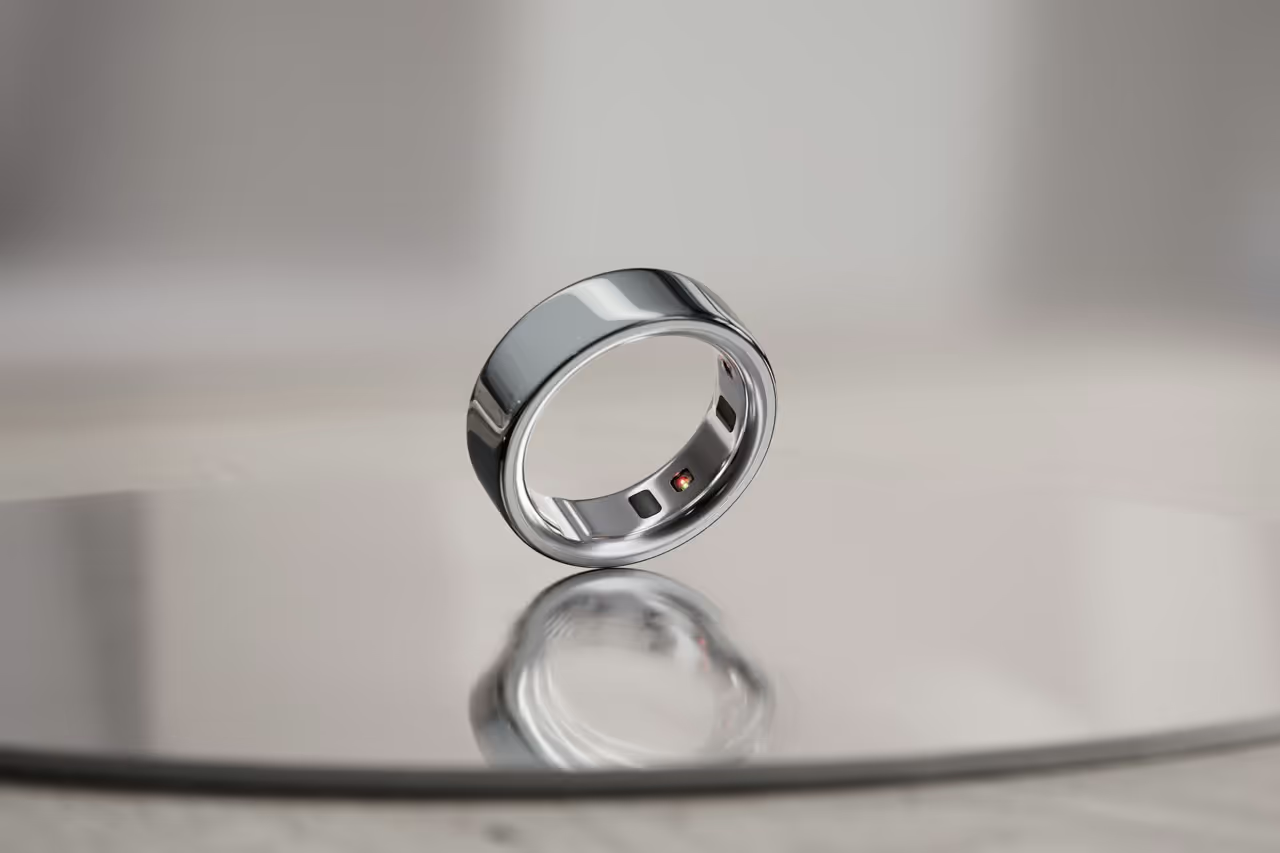
Smart cycle tracking has gotten more advanced than manual calendar tracking or simple period apps. With options such as smart devices, wearables, and advanced trackers on the market, people can gather more detailed and comprehensive data for monitoring their cycles.
Some popular advanced trackers include:
- Mira Fertility Tracker - At-home hormone testing kit that connects to an app on your smartphone that keeps track of your results.
- Clearblue Fertility Monitor - Detects LH and estrogen levels, with a test that adapts to a person’s individual hormone profile.
- Oura Ring - Health and wellness tracker that consistently monitors biometrics like temperature, heart rate, and stress.
- Tempdrop - An arm band wearable that tracks basal body temperature (BBT) during sleep.
- Ava - Similar to Tempdrop, Ava is a wearable device for monitoring BBT while sleeping.
- Natural Cycles - Uses the combination of a thermometer and app to collect BBT data and identify the fertile window.
- Kegg Fertility Tracker - A tracker for testing changes in cervical mucus each day.
Reasons to use smart cycle trackers
These tools can provide deeper insights into your cycle and uncover trends or patterns you might otherwise miss. They’re especially helpful when lifestyle changes interfere with simpler tracking methods.
Limitations of using advanced tracking methods
The tools and devices mentioned above are more expensive than other methods, and often have a learning curve. Some people may not be comfortable with the level of tech adoption required to use these trackers.