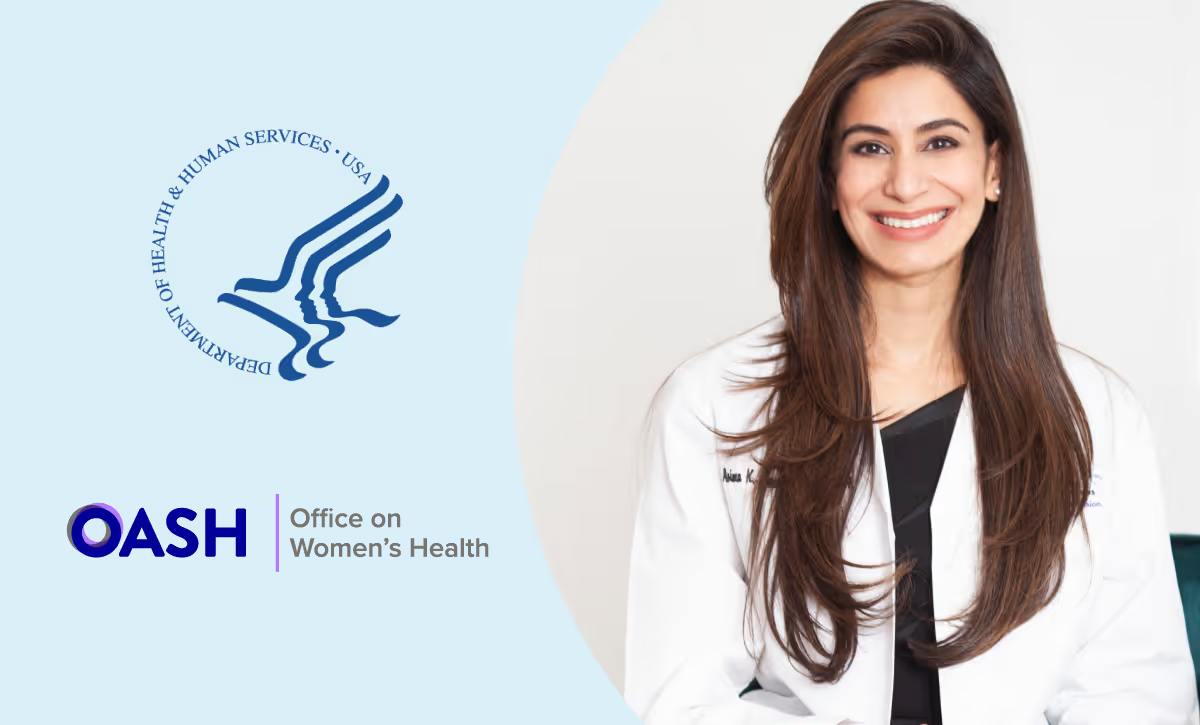
Carrot CMO and Co-founder Dr. Asima Ahmad appointed HHS Women's Health Ambassador — here's what that means, and why it matters
May 18, 2026
•
Asima Ahmad, MD, MPH, FACOG, DABOM
•
•
I am honored to share that I have been appointed a Women's Health Ambassador by the U.S. Department of Health and Human Services (HHS) Office on Women's Health — an appointment that coincided with National Women's Health Week, observed May 10–16, 2026.
I want to share what this recognition means to me, and what I hope to do with it.
The problem we keep coming back to
Women's health has, for too long, been treated as a specialty within a specialty — a narrow lane defined by reproductive milestones and little else. We see this in how conditions are diagnosed (or not diagnosed), in how symptoms are dismissed, in how the research has historically been designed and funded.
What the Office on Women's Health is pushing toward, and what I have seen building momentum across clinical, policy, and research communities, is something more expansive and more honest: women's health as metabolic health, cardiovascular health, hormonal health, reproductive health, longevity, prevention, and population health all at once.
This is not a new idea. But the urgency behind it feels different right now.
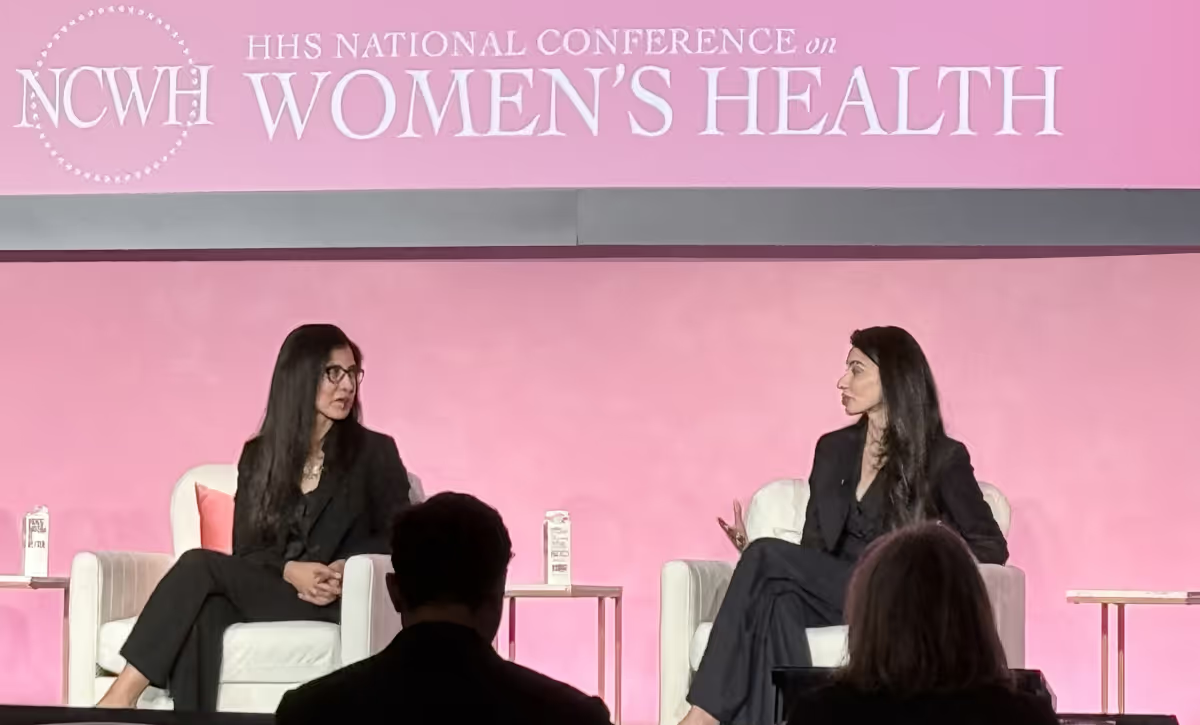
Earlier this year, I had the opportunity to present research from Carrot at the inaugural HHS National Conference on Women's Health in Washington, D.C., and to speak on a panel about chronic conditions and their links to fertility outcomes. The conversation reinforced something I think about constantly in my clinical practice: the cost of delayed identification is enormous, and it disproportionately affects women.
For conditions like endometriosis and PCOS — renamed this week to Polyendocrine Metabolic Ovarian Syndrome (PMOS) — the average time from symptom onset to diagnosis spans years. Those years matter. They shape fertility outcomes and uterine cancer risk. They shape long-term metabolic and cardiovascular health. They result in higher rates of depression and anxiety in these women, many who struggle to manage the symptoms. And they drive costs that could have been avoided.
The data we presented at the conference reinforced this. Women with diagnoses of PMOS, ovulatory dysfunction, and related conditions who engaged with Carrot's programs experienced meaningfully better outcomes during fertility treatment than national averages, including higher rates of single embryo transfer and fewer preterm deliveries. Earlier identification, earlier intervention, better outcomes. The evidence is there. The question is whether we act on it.
What the ambassador role is — and isn't
Being named a Women's Health Ambassador is not a policy position. It’s an invitation to contribute and bring clinical evidence into conversations about how women's health messages reach the public, how prevention gets prioritized, and how a longitudinal, lifespan approach to care becomes the norm rather than the exception.
Over the coming year, I will participate in HHS women's health initiatives and work alongside other clinical leaders, advocates, and researchers who share a commitment to moving women's healthcare from reactive and fragmented to proactive and comprehensive.
That alignment is not coincidental. It’s the same principle that underlies our recent product innovations: Carrot Intelligence, our proprietary global AI platform built on the largest clinical dataset of its kind, and Sprints, our AI-native metabolic health program. With both, we are delivering the right clinical guidance, at the right moment, in the context of each person's life — not just when they are already struggling, but well before.
What I am carrying into this work
I came to this role as a clinician first. I see patients. I’ve watched women wait too long for diagnoses that should have come years earlier. I’ve seen what happens when metabolic health is finally addressed earlier in the fertility journey, and I’ve seen what happens when it is not.
That experience — and the research it has informed — is what I hope to bring into the conversations ahead.
Women's health is not niche medicine. It’s the health of the population. And the field is finally starting to treat it that way.





.avif)