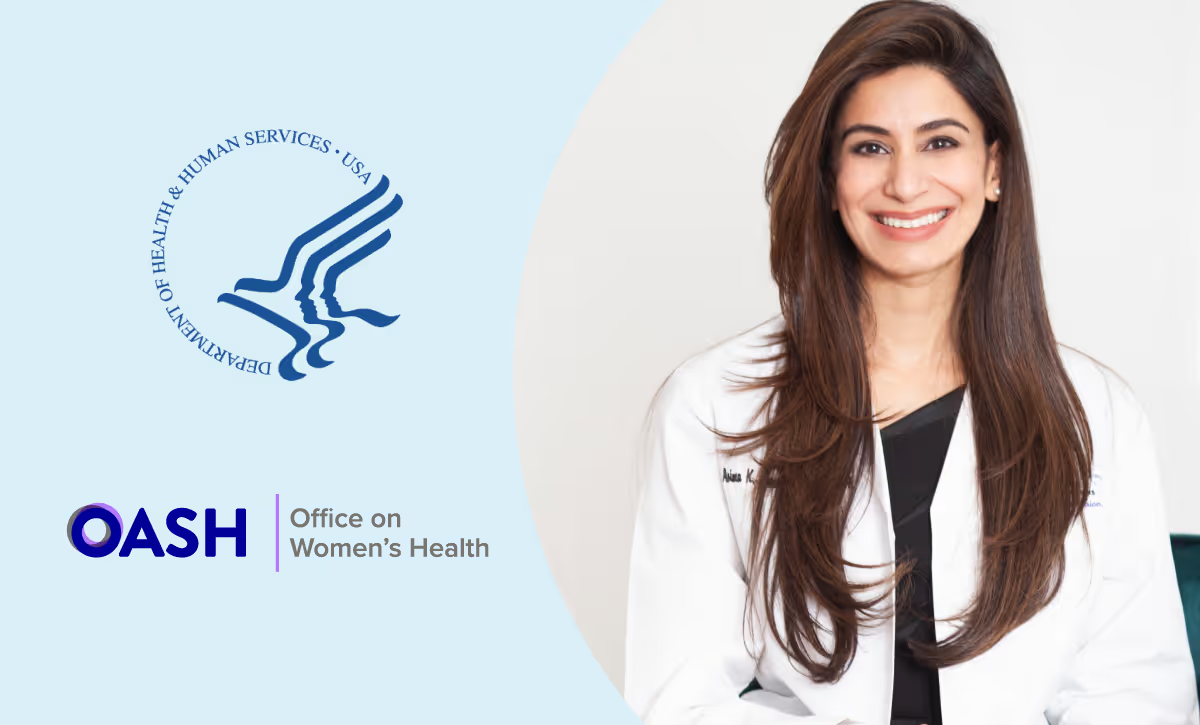
Only 12.2% of U.S. adults meet criteria for optimal metabolic health, and for women of reproductive age, the consequences extend well beyond cardiovascular risk. Chronic metabolic conditions are a leading and often overlooked driver of infertility and adverse pregnancy outcomes. Against this backdrop, Carrot, the leading global fertility and family care platform, today announced its participation in the inaugural U.S. Department of Health and Human Services (HHS) National Conference on Women's Health in Washington, D.C.
Carrot presented two accepted research abstracts that contribute to a growing body of evidence that employer-sponsored digital platforms can meaningfully improve reproductive outcomes and address chronic disease in women of reproductive age. The three-day conference brings together preeminent practitioners, researchers, and policy leaders, among them National Institutes of Health (NIH) Director Jay Bhattacharya, Food and Drug Administration Commissioner (FDA) Marty Makary, and Advanced Research Projects Agency for Health Director Alicia Jackson, at a pivotal moment for women's health policy. Carrot's participation reflects the growing recognition that addressing the root causes of infertility and adverse pregnancy outcomes before they require costly intervention is essential to improving outcomes and expanding access.
"Carrot exists because fertility care has always been out of reach for too many people — too expensive, too fragmented, too late in the process,” said Tammy Sun, Founder and CEO of Carrot. “Our research shows what happens when we intervene earlier and smarter. Bringing that evidence to an inaugural HHS conference, alongside NIH and FDA leadership, is exactly the kind of moment we built this company for."
The first abstract, presented by Dr. Asima Ahmad, Chief Medical Officer at Carrot, examines the connection between metabolic health and fertility and introduces Sprints, the first and only metabolic-fertility program. Sprints is designed to help members address chronic metabolic conditions during what Carrot refers to as the “Premester,” the 3–12 months before pregnancy and a high-impact, underutilized window to optimize reproductive and maternal outcomes. The program delivers personalized daily guidance across nutrition, movement, sleep, stress management, and medical care, with optional partner participation.
The second abstract, presented by Kelley Anderson, Senior Director of Clinical Outcomes at Carrot, looks at what happens when women are supported in understanding their cycles earlier and guided to the right care sooner. Women under 35 with diagnoses of polycystic ovary syndrome (PCOS), ovulatory dysfunction, or thyroid disease who engaged with Carrot's platform and received referrals for advanced reproductive care experienced meaningfully better outcomes than national averages during fertility treatment, with industry-leading rates of single embryo transfer, more singleton births, and fewer preterm deliveries.
“Reproductive health is whole-body health, and yet our medical system has historically waited until women are struggling to conceive to start asking basic questions,” said Dr. Ahmad. “As we suspected, the data show that earlier intervention improves fertility and pregnancy outcomes. This conference puts that evidence on a platform where it can drive real change.”
Dr. Ahmad also participated in a panel discussion, “Addressing chronic conditions in the evaluation of infertility,” on Thursday, March 12. The panel highlighted chronic conditions and infertility, including PCOS, endometriosis, metabolic health, and opportunities to improve diagnosis and access to care.