


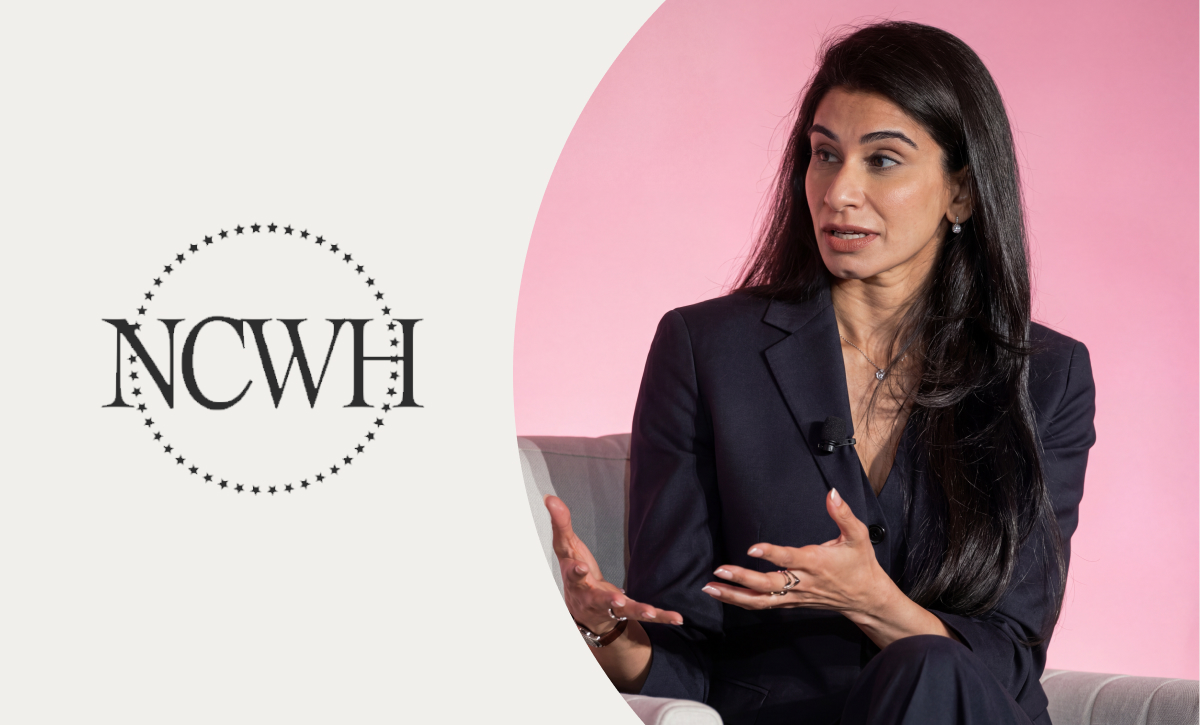
Last month, clinicians, researchers, policymakers, and healthcare leaders gathered in Washington, D.C. for the inaugural U.S. Department of Health and Human Services National Conference on Women's Health. Over three days, the conversation kept returning to a theme that felt long overdue: the field needs to do a better job of listening to women.
As Carrot's Chief Medical Officer and Senior Director of Clinical Outcomes, we were there to present new research and participate in the conversation. Here is what stayed with us.
The culture shift the field is finally ready to have
One of the most consistent refrains across sessions was a call to change how medicine responds to women's symptoms. For too long, women have described fatigue, pain, irregular cycles, and mood changes only to be told it's stress, or to come back if it gets worse. The conference emphasized that delaying diagnosis and management for women is a systemic failure we need to address.
This is especially important for conditions like endometriosis and PCOS, where the average time from symptom onset to diagnosis can span years. The cost of that delay in suffering, in fertility outcomes, in care expenses that could have been avoided, is one our field is increasingly unwilling to accept.
Earlier intervention on chronic conditions changes outcomes
Dr. Ahmad presented at a panel focused on chronic conditions and infertility, covering the links between PCOS, endometriosis, and poor metabolic health and their effects on fertility, treatment pathways, and pregnancy outcomes. The evidence continues to show that earlier identification and management of these conditions can change the entire trajectory of care and improve fertility outcomes.
The data Carrot presented reinforced this. Women under 35 with diagnoses of PCOS, ovulatory dysfunction, or thyroid disease who engaged with Carrot's platform experienced meaningfully better outcomes during fertility treatment than national averages, including higher rates of single embryo transfer and fewer preterm deliveries. The Premester — those three to twelve months before pregnancy — remains one of the most underutilized windows in reproductive care.
This is also the foundation of Carrot's Sprints program, which addresses metabolic health as a direct driver of fertility outcomes. Researchers from the CDC and NIH expressed particular interest in how Sprints is improving fertility care, which shows that this work is landing at the right level of the policy conversation.
A pivotal moment for hormone therapy
The FDA's recent removal of the black box warning on hormone therapy (HT) was a prominent topic throughout the conference. That warning was rooted in a 2002 study that was widely mischaracterized by the media, yet has shaped two decades of clinical hesitancy. This has affected both the physicians willing to prescribe HT and the patients willing to take it.
The current evidence shows that for people under 60, or those who begin HT within ten years of menopause, the benefits include both symptom relief and protection from chronic disease. The conference also highlighted the specific roles of vaginal estrogen in managing genitourinary syndrome of menopause (GSM) and of HT in supporting bone health, both areas where undertreatment has real long-term consequences.
The removal of the black box warning is an important shift. Clinicians can prescribe with more confidence. Patients can make decisions without outdated fear.
AI in diagnostics and care delivery
Artificial intelligence was threaded through much of the conference. Its role was examined in diagnostics, precision medicine, data integration, and care delivery models. The discussions focused on where AI is already producing reliable clinical signals and where the evidence still needs to mature.
For Carrot, the framing resonates. The goal is not AI for its own sake, but AI in service of earlier, more accurate, and more personalized care, particularly for populations who have historically been underserved by standard care approaches.
Benefit gaps are a policy priority
Several government agencies noted meaningful gaps in reproductive health benefits coverage and expressed interest in how employer-sponsored programs could help address them. These conversations were central to the conference's agenda.
The conference also drew strong interest in Carrot's faith-inclusive care model, which resonated with attendees from the Restorative Reproductive Medicine community and with policy stakeholders focused on expanding access across diverse populations.
The appetite for comprehensive, inclusive reproductive health benefits at the policy level is there. For employers, this shows that the case for investing in these benefits is being made not only by HR teams and benefits consultants, but by policymakers too.
Looking ahead
The inaugural HHS National Conference on Women's Health was significant for both what was discussed and who was in the room. Clinicians, researchers, federal agency leaders, and industry partners working on the same problems in the same space should be the norm.
Carrot's presence — through our research, our clinical leadership, and the conversations we were part of — reflects our commitment to being where these decisions are made. The work of improving women's reproductive health outcomes requires collaboration across sectors. We are glad to be part of it.







.svg)

