


The work we do at Carrot matters now more than ever.
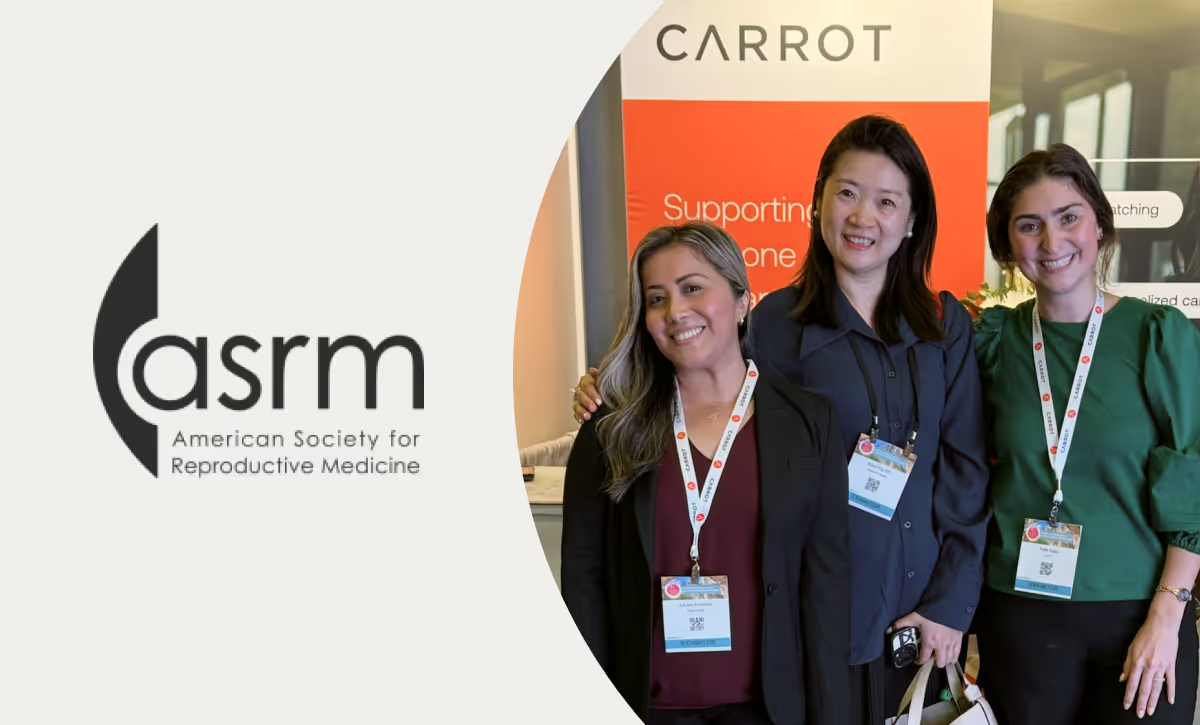
The Carrot provider partnerships team recently attended the American Society for Reproductive Medicine Scientific Congress & Expo in Denver where over 5,500 professionals gathered around this year’s theme, "Global Collaboration to Advance Reproductive Health." With enthusiastic discussions about metabolic health and male infertility, trends across sthe Congress reinforced the value of Carrot’s approach to providing comprehensive, personalized fertility, hormone, and family-building benefits.
Metabolic health, front and center
The scientific sessions consistently validated that fertility care requires a comprehensive approach that addresses root causes. This aligns with the concept of the "Premester" — those 3-12 months before pregnancy. Health decisions made during these months, particularly around metabolic health, can dramatically affect fertility outcomes.
Research presented at the conference highlighted how conditions rooted in metabolic dysfunction are one of the largest and fastest-growing causes of fertility challenges. Only 12 percent of Americans have ideal metabolic health, and disorders like obesity and blood sugar dysregulation make it harder to get pregnant and lead to lower IVF success rates. This reinforces the power of Sprints, our metabolic-fertility program that focuses on nutrition, movement, sleep, and stress management.
Male infertility must be addressed
The sessions on male infertility revealed concerning trends about paternal age and its impact on outcomes. Paternal age of 40 and older is associated with declines in semen quality and increased risks for adverse outcomes. In donor cycles, paternal age under 50 correlates with lower miscarriage rates and higher blastocyst yields, demonstrating that male age impacts embryologic metrics in meaningful ways.
The Congress also highlighted an unfortunate truth: the stigma about male infertility is real and prevalent. The data on this is limited, especially for marginalized communities, but the fertility journey often isolates men, even though they constitute 50 percent of infertility cases. It’s essential to focus on better education and integrated male health screening as part of comprehensive fertility care.
Doors are opening for diverse workforces
Meeting with colleagues from across Latin America, Europe, and beyond highlighted both significant progress and persistent gaps in fertility care access. The global nature of ASRM — with clinicians, researchers, and exhibitors from countries around the world — underscored that infertility is truly a global issue.
This is particularly relevant as we think about modern workforces and modern benefits. Traditional benefits models are failing to meet the needs of today's distributed, diverse workforce. One-in-six employees struggle with getting pregnant, and 20 percent of the workforce is in some kind of menopause transition, yet most employers offer no support for this major life stage.
Moving forward together
What resonated most throughout ASRM 2025 was the shared commitment across thousands of attendees to advancing reproductive health for all populations — from preconception through menopause, and across all paths to parenthood.
At Carrot, we're proud to be part of this global collaboration, working alongside clinicians, researchers, and advocates who share our vision of making comprehensive fertility and family care accessible worldwide. The insights from ASRM 2025 reinforce our commitment to an evidence-driven approach that prioritizes clinical excellence, addresses root causes, and supports all members through their unique journeys.






.svg)

